Curriculum
Education at William Austin Junior School will follow on progressively from your child’s experiences at their Infant School.
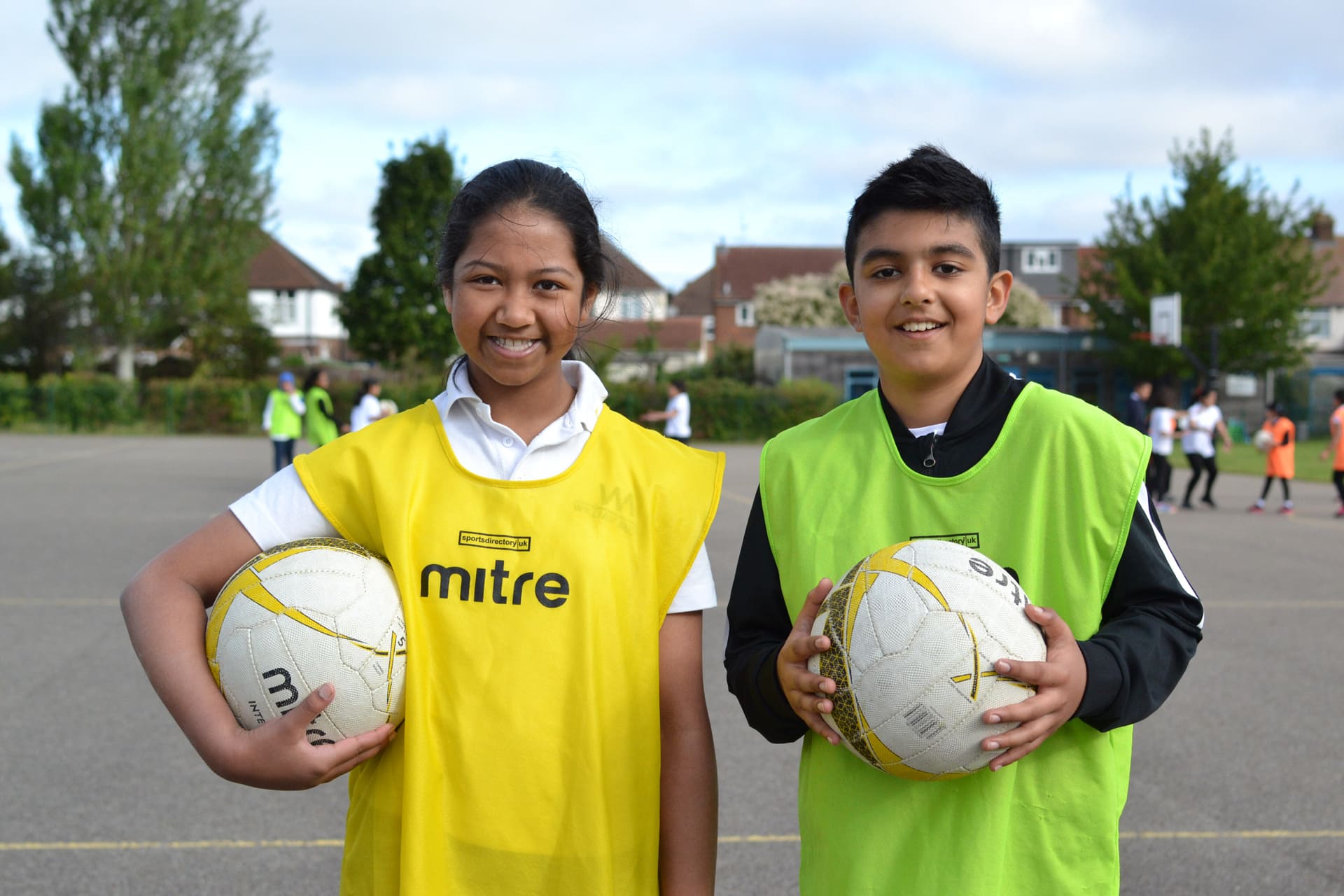
Our curriculum is based on the National Curriculum. English and Maths are taught daily. Science, Computing, History, Geography, Art, Design and Technology, Religious Education (RE), Personal, Social, Health, Citizenship & Economic Education (PSHE), French, Games, Spelling, Multiplication Tables and Reading are taught throughout the week by the class teacher. We also employ a specialist teacher for Physical Education (PE) lessons.
The class teacher will assess your child’s work throughout each term and this will be reported to you at our regular Parent Consultation evenings and through the end year report.
At the end of Year 4 your child will take the statutory Multiplication Tables Check (MTC). The purpose of the MTC is to determine whether pupils can recall their times tables fluently, which is essential for future success in mathematics. A copy of our latest MTC results can be seen in the performance tables pages on our website.
When your child reaches Year 6, at the end of Key Stage 2, they will take the Key Stage 2 National Tests (SATs). These tests will indicate their progress and achievement, the results, along with a teacher assessment grade will be reported to you. A copy of our latest Key Stage results can be seen in the performance tables pages on our website.
Teachers and Teaching Assistants support pupils with SEND through a variety of ways, depending upon the child’s needs. Our SEND CO, Mrs Douglas, leads a team of Teaching Assistants who are well trained to support pupils inside and outside of the classroom. Phonics interventions are carried out by Teaching Assistants for identified pupils who did not pass the Phonics Screening at Key Stage 1. We use the DfE validated Little Wandle Letters and Sounds Revised as our phonics catch up programme.
Our curriculum is diverse and inclusive and allows opportunities for pupils to broaden their knowledge and experiences through a range of learning opportunities and enrichment activities.
Whole school policies for all subjects are available on the website or from the school office, on request.
Click onto the curriculum headings below to find out more about each subject including the overview and progression documents.
At William Austin Junior School, we are passionate about ensuring that every child becomes a confident reader and develops a lifelong love of reading. Reading is at the heart of our curriculum, with opportunities to read embedded across all areas of learning. Teachers share high-quality class novels daily, and topics are enriched through the use of a wide range of fiction, non-fiction and poetry texts. Our well-stocked, up-to-date library allows children to choose books that match their interests and reading ability, and we encourage all pupils to read with an adult at home for at least ten minutes each evening.
Children are exposed to a rich variety of high-quality literature through guided reading lessons and across the wider curriculum. Key reading skills, including fluency, vocabulary development, retrieval and inference, are explicitly taught and practised using a range of carefully selected texts. Additional support is provided through targeted one-to-one and small-group interventions to ensure that all children can succeed as readers.
To promote reading for pleasure, every classroom has an inviting and well-stocked reading corner, while two larger reading areas provide calm and comfortable spaces where children can enjoy books and develop a genuine enthusiasm for reading.
Writing
Our writing curriculum is based on the Talk for Writing approach. During the Imitation stage, children are immersed in a model text, exploring its language, structure and effect on the reader. In the Innovation stage, pupils adapt the model by introducing their own ideas, characters, settings and vocabulary whilst maintaining the underlying structure. They draw upon carefully planned toolkits that highlight the key features and ingredients of each text type. Finally, in the Independent Application stage, children apply their learning to create their own pieces of writing, demonstrating the skills and techniques they have developed throughout the process.
Grammar, punctuation and spelling are taught progressively throughout the writing journey and are linked closely to both the text type being studied and the National Curriculum expectations for each year group.
At the core of our writing curriculum is the understanding that sentences are the building blocks of successful writing. Through carefully selected strategies from The Writing Revolution, pupils are explicitly taught how sentences are constructed and how language works. By developing their understanding of grammar, vocabulary and syntax, children build fluency and confidence as writers, enabling them to communicate their ideas clearly and effectively across a wide range of subjects and writing contexts.
Handwriting
The development of a fluent, legible and joined handwriting style is taught explicitly throughout the school and reinforced across all curriculum areas. Building on the foundations established in the infant school, pupils are taught a cursive handwriting style and are
encouraged to apply this consistently in all written work. Children write in pencil or blue ink, and those who demonstrate a consistently high standard of handwriting and presentation are awarded a Pen Licence, recognising their achievement and readiness to write with a pen. Pens can be purchased from the school shop.
Spelling
At William Austin Junior School, spelling is taught through a structured programme that is informed by the National Curriculum expectations for each year group. Spelling lessons are taught in discrete 20-minute sessions and focus on developing pupils' understanding of spelling rules, patterns and conventions. We use the Spellzoo resources to support the teaching and learning of spelling across the school.
Children are encouraged to apply their knowledge of phonics, word structure and morphology when attempting to spell unfamiliar words. Alongside learning spelling patterns and rules, pupils are taught words from the National Curriculum statutory spelling lists. These words can also be found in the centre pages of each child's reading record.
Children are expected to practise and learn the spelling patterns and words studied during the week. Regular spelling tests help pupils to recall and apply their learning, with tests taking place weekly.
Through high-quality teaching and regular practice, we aim to develop confident spellers who can apply their knowledge accurately across all areas of the curriculum.
The development of a legible and joined handwriting style is encouraged in all lessons. Children are taught the continuous cursive style building on from the style taught in the infant’s school. Children should write in pencil or blue ink. When children’s handwriting has reached an acceptable standard, they are awarded a pen licence. Pens are sold in the school shop.
Children follow a spelling programme throughout the school, informed by the National Curriculum requirements. These are taught in discrete, 20 minute lessons. During these sessions, the school aims to improve children’s knowledge of spelling patterns. We use the Spellzoo resources to support pupils learning spellings.
Children are encouraged to make plausible attempts at spelling unknown words, using their phonological and morphological knowledge. Children are also taught words from a statutory list; these can be found in the middle of children’s reading records.
The children are expected to learn any spellings patterns they have been working on during that week. Children will be given a weekly test in class; Friday for Y6, Wednesday for Y5, Thursday for Y3 and Monday for Y4.
Homework is an important and integral part of education at William Austin Junior School. All children are expected to:
- read their reading book on a daily basis and have their reading record card signed by a grown up
- learn their multiplication tables
- learn their spelling patterns
- work on their weekly Learning Log task demonstrating what they have learnt in class related to a topic they have studied using a success criteria, given out on Wednesday and due back on Monday
- work on their English and maths homework
We set a variety of English and maths tasks depending upon the year group your child is in.
Year 3
Year 4
In Year 4, children receive homework each week that is closely linked to the curriculum and reflects the learning taking place in class. This includes 10 minutes of reading and 10 minutes of TTRS (Times Tables Rock Stars) each day.
Maths homework consists of questions that allow children to practise a skill they have recently learned in class and will also include a multiplication activity.
English homework includes sentence activities, reading comprehension tasks and SPaG (Spelling, Punctuation and Grammar) activities.
Spellings are given out alongside the English homework, and children should complete one spelling activity each day. Children will also be set a weekly Learning Log task to complete.
Year 5
Children in Year 5 are encouraged to read for ten minutes each day. There is a weekly Learning Log task.
Maths: Children complete homework tasks related to the lessons they’ve covered that week. These tasks include clear success criteria, worked examples, a short independent practise task, and a challenge to assess their understanding. Additionally, they spend 10 minutes daily on Times Tables Rock Stars (TTRS) to reinforce their multiplication skills. Maths homework must be returned by Wednesday so children can self-assess, and new homework will be set on this day.
English: Homework includes a grammar activity, a short comprehension task, and a word or sentence-level task to support their writing in school. English homework should also be returned by Wednesday for self-assessment, and new homework will be set on this day.
Spellings: Key words and spelling patterns are taught on Mondays through the SpellZoo programme. Children are given ten spellings to learn at home after their lesson on Monday and will be tested on Friday, giving them time to practise throughout the week.
Year 6
Holiday Homework Gallery – all year groups
Before each half-term, children will have the option to create a 3D model that will be displayed in a whole-school gallery which is viewed by parents, pupils and staff on the first day back after each holiday.
Pupils in Little Wandle Rapid Catch Up Phonics interventions
Pupils who attend the daily phonics interventions will be given a spelling list and a reading book which is based on the phonic phase they are on. A list of spellings from their phonics phase will be handed out on a Monday and a spelling test will take place on a Friday during the phonics session.
Pupils with SEND
Pupils may receive differentiated homework, or additional resources so they are able to complete it successfully. Pupils with an Individual Education Plan (IEP) have home targets to work upon, with resources sent home by the class teacher. Parents are responsible for supporting their child with these home targets, which are reviewed termly with the class teacher.

The study of mathematics is an important and well-liked part of daily life at William Austin Junior School. Children have a maths lesson with their class teacher each day as well as regular timetabled sessions to practise and learn their multiplication tables.
We aim to make the teaching and learning of maths as effective as it can be and staff receive regular in-house and external professional development opportunities to develop their practice. In the 2017/2018 and 2018/2019 academic years, we participated in a primary mathematics Teaching for Mastery Research Group led by one of the Enigma Maths Hub’s Mastery Specialists. Working closely with a small group of schools we have sought to introduce and develop approaches to teaching for mastery as well as developing policies and structures that would allow this to happen. As a result of involvement in the work group we took the informed decision to follow the White Rose Maths schemes of learning to help address the three aims of the National Curriculum – Fluency – Reasoning – Problem Solving.
Our approach to the teaching and learning of mathematics:
- Whole class together – at William Austin we aim to nurture a Growth Mind-set ethos. We have high expectations of all children and believe that by working hard they can succeed in maths. Challenge is provided through rich and sophisticated problems in order to achieve a greater depth of understanding. We also recognise that some children may need longer to grasp concepts and require careful scaffolding or extra time and support.
- Longer and deeper – Longer time is spent on each topic. Each lesson focuses on one key conceptual idea and connections are made across mathematical topics. By breaking the learning down into manageable steps children should understand the concepts better.
- Key learning points – Are identified during planning and a clear journey through the maths will be reflected in lessons. Questions will probe pupil understanding throughout and responses are expected in full sentences, using precise mathematical vocabulary. Stem sentences will be used to identify key learning points in all lessons.
- Potential misconceptions – Are identified during the planning process and used as opportunities for learning. Children are then supported through these.
- Fluency – We recognise that ‘fluency’ is not just about remembering facts and aim to develop all aspects of fluency through lessons. We are however focussing on developing instant recall of key facts, such as multiplication tables, which are taught and practised daily. This will allow the children to have a free working memory to solve more complex problems.
- Procedural Fluency – Conceptual understanding and written methods are developed and applied in tandem by following the school calculation policy (White Rose Maths).
- Develop reasoning and deep understanding – problems are usually set in real life contexts with carefully chosen representations (manipulatives and images) used by all to explore concepts. The use of practical resources, pictorial representations and recording takes place during every concept following the Concrete Pictorial Abstract approach (CPA).
- Questions – to challenge thinking are used throughout every lesson to check understanding. A variety of questions are used to foster different levels of thinking e.g. How do you know? Can you prove it? Are you sure? Is that right? What’s the same/different about? Can you explain that? Questions are also used to further challenge children who have grasped the concept.
- Practising – All children will have the use of a jotter that they can use to explore their ideas and strategies without fear of making a mistake. Children may record models, diagrams, thoughts and explanations during any part of the lesson.
- Conferencing (same day catch up) – new learning is built upon previous understanding. In order for learning to progress and to keep the class together, areas of difficulty are dealt with as and when they occur. Where possible, these are addressed through same day conferencing sessions.
- Marking – the marking policy follows the NCETM guidance published in April 2016. Children’s work is marked by the teacher daily. A comment or prompt will only be given if it necessary to move learning forward. The most valuable feedback will be given immediately, during lessons.
At William Austin Junior School, science is a world of exploration, curiosity and discovery. We follow the White Rose Science scheme of learning, which is carefully aligned with the National Curriculum. Learning is broken into small, progressive steps so that children build secure knowledge and understanding across biology, chemistry and physics. Scientific vocabulary is explicitly taught and revisited, enabling children to explain their ideas with increasing confidence and accuracy.
Throughout each unit, children develop both scientific knowledge and the skills needed to work scientifically. They are encouraged to ask questions, make predictions, observe, measure, classify, gather and present data, identify patterns and draw conclusions. Practical enquiry is embedded throughout our curriculum, allowing children to apply their learning through meaningful, hands-on experiences. This supports children of all abilities, including those with SEND and EAL, to develop confidence and independence as scientists.
The Willow Garden provides a valuable outdoor learning environment where children can apply their scientific knowledge in a real-life context. Through guided sessions, children explore habitats and living things as well as planting, growing and harvesting fruit and vegetables. Children are encouraged to observe changes over time, ask questions and make connections between classroom learning and the natural world. Playground Science also provides opportunities for children to continue exploring scientific ideas independently.
Science Capital plays a vital role in our school. Throughout the year, STEM visitors, enrichment opportunities and National Science Week help children recognise how science connects to everyday life and future careers. Cross-curricular learning and real-world contexts provide further opportunities for children to build their scientific understanding, curiosity and cultural capital, inspiring them to see themselves as scientists and to question the world around them.
Working scientifically skills mapping

Art is taught in termly blocks in all year groups. Across the four years, children learn techniques of sketching, drawing, painting, collage and sculpture in a range of contexts. Furthermore, they develop their understanding of different styles, artists and historical periods.
Progression is secured in the knowledge and skills of how to appreciate and control the various materials that they work with. Additionally, each term, an Art award is given to one child per class to celebrate their outstanding effort in this subject. Children are also set a 3d holiday homework task where they have the opportunity to practise their Art skills further making significant contribution to display boards around the school.
We are also delighted to inform you that we have recently been awarded an Artsmark Silver Award as we have extended our arts provision for children in a number of ways. Pupils develop their knowledge, skills and understanding of arts and culture through a broad range of experiences and opportunities.
In our Design and Technology (DT) curriculum, we set a variety of tasks to help develop the children’s creativity and imagination. The children are provided with engaging and exciting topics that encourage them to design items for specific audiences and purposes.
Throughout each unit, the children build upon the four key skills of DT: design and plan, explore new materials, make and evaluate. Additionally, across the four years, the children experience different themes: textiles, mechanical systems, electrical circuits and food technology. We aim to broaden the children’s experience by working with a wide range of tools and equipment and build upon their problem solving skills.
Furthermore, each term, a DT award is given to one child per class to celebrate those who have made an exceptional effort in this subject.
In History, children have excellent opportunities to develop their knowledge and understanding of British, local and world history. The curriculum allows children to explore history using different mediums such as primary and secondary sources of information, historical artefacts and cultural visits.
The teaching and learning of History will develop children’s chronological understanding, improve their researching skills, expand the use of historical terminology and challenge their thinking of the world we live in. Children will explore questions surrounding change, cause and effect, similarities, differences and the significance of specific historical periods. They will be encouraged to discuss key connections, contrasts and trends within their topic of study.
We encourage the children to step back in time and experience life as our ancestors before us, travelling back to ancient Egypt, Greece and Rome, the Victorian era, the Anglo-Saxons, Vikings and as far back as the Stone Age. It will invite children to become investigators as they carry out local studies of historical places in Luton and surrounding areas. This includes a local walk through the Limbury and Biscot area, a visit to Celtic Harmony and St Albans cathedral, as well as other educational visits and workshops within school.
At our school, we aim to make History an exciting, engaging and accessible topic to all children and one that will inspire pupils’ curiosity to know more about the past.
During the course of their four years at William Austin Junior School, the pupils follow the RE syllabus laid down by SACRE for Bedfordshire and Luton. The principal aim of RE is to explore what people believe and what difference this makes to how they live, so that pupils can gain the knowledge, understanding and skills needed to handle questions raised by religion and belief, reflecting on their own ideas and ways of living. The pupils will also look at how morality, spirituality, ethics and social issues affect people. There will also be some scope to looks at smaller traditions and non-religious but morally based movements such as humanism.
Pupils will cover many aspects of the major religions of the world including Judaism, Islam, Sikhism, Christianity and Hinduism. The syllabus is divided into lower and upper key stages. Pupils will study 6 different subjects during each of the four years, 24 in total. It is developed systematically to build on year on year and expands and builds on that which is taught in KS1. The RE syllabus also links closely with PSCHE and our Values based education programme. Both programmes encourage cross curricular links, reflection and self awareness whilst raising awareness of other beliefs and values.
The purpose of RE includes:
- RE contributes dynamically to children and young people’s education in schools by provoking challenging questions about meaning and purpose in life, beliefs about God, ultimate reality, issues of right and wrong and what it means to be human.
- In RE, pupils learn about religions and beliefs in local, national and global contexts, to discover, explore and consider different answers to these questions.
- They learn to weigh up the value of wisdom from different sources, to develop and express their insights in response and to agree or disagree respectfully.
- RE teaching therefore should equip pupils with systematic knowledge and understanding of a range of religions and beliefs, enabling them to develop their ideas, values and identities.
- It should develop in pupils an aptitude for dialogue so that they can participate positively in our society, with its diverse religions and beliefs.
- Pupils should gain and deploy the skills needed to understand, interpret and evaluate texts, sources of wisdom and authority and other evidence. They should learn to articulate clearly and coherently their personal beliefs, ideas, values and experiences while respecting the right of others to differ.
At William Austin Junior School, Geography is taught in all year groups as a stand-alone subject with cross curricular links in English and Maths. The Geography curriculum retains some flexibility, and builds and expands on previous knowledge taught in KS1. The key skills that children will develop are to:
· collect, analyse and communicate with a range of data gathered through experiences of fieldwork
· interpret a range of sources of geographical information, including maps, diagrams, globes, aerial photographs
· communicate geographical information in a variety of ways, including through maps, numerical and quantitative skills and writing at length
As well as the skills, Geography is further divided into 3 main areas, which are:
· Locational knowledge
· Place knowledge
· Human and physical geography
Locational knowledge examines latitude, longitude and time zones. Your child will use maps to focus on Europe, North and South America, concentrating on regions, key physical/human characteristics, countries, and major cities. They will also work on locating the counties and cities of the United Kingdom, and start to explore their human and physical characteristics.
Children also examine geographical similarities and differences by comparing the geography of a region of the United Kingdom with a region in a European country, and with a region in either North or South America. This is part of the place knowledge aspect of the curriculum.
For human and physical geography, your child will be taught to describe and understand key aspects of geography, for example: climate zones, rivers, mountains, volcanoes, earthquakes, types of settlement, economic activity and the distribution of natural resources.
At William Austin Junior School every child has one hour of music a week. In these music lessons the children are taught a range of progressive musical skills whilst learning about different genres of music. Throughout their time at William Austin the children are taught to play the djembe, recorder, ukulele, keyboard and take part in a class samba band.
To further enhance the children’s musical experience there is an after-school ukulele club where children from across the school can explore playing and performing together. Children who enjoy singing are encouraged to join the thriving school choir, which has members from all year groups. The choir frequently perform in the local community such as at Luton airport and at a Luton schools’ event, ‘Singing Spectacular’. This year the choir are also taking part in an event run by Young Voices where they will be singing at the O2 arena.
At William Austin Junior School we value the rights and responsibilities children and young people have as they grow and mature into young citizens. Understanding who they are and where they belong is a basic right and having the skills and vocabulary to express whatever that may mean to them, is fundamental to a healthy start in life.
We take part in the Schools Linking Network project and this develops further understanding of their place in the world and in their various communities, of home, school and any other places they may associate with, strengthens the foundations for healthy citizenship and sets them on a path for adulthood, where they feel they have a place and that they have something to contribute. A healthy sense of belonging can best be fostered through a combination of high quality experiential learning and reflective classroom practice.
The aims of the project are:
- To develop and deepen children and young people’s knowledge and understanding of identity/ies, diversity, equality and community
- To develop skills of enquiry, critical thinking, reflection and communication
- To develop trust, empathy, awareness and respect
- To provide opportunities for children and young people to meet, build new relationships, work together and contribute to the wider community
- To provide opportunities for adults, who work with children and young people, to share good practice, increase understanding of the issues of identity and community in their districts and to broaden perspectives.
As part of the Schools Linking Network project we link with a local school in the town.
Spiritual, Moral, Social and Cultural (SMSC) development sits at the heart of our school community. It shapes not only what pupils learn, but who they become. High‑quality SMSC provision helps children grow into confident, reflective and responsible individuals who understand themselves, value others, and contribute positively to society.
SMSC is not a standalone subject. It is woven through daily school life — from classroom discussions and assemblies to enrichment activities, behaviour expectations and the wider ethos of our school. Through this holistic approach, pupils develop the ability to reflect on their beliefs, make informed moral choices, build healthy relationships, and appreciate the diverse cultural world around them.
A strong SMSC curriculum supports pupils to:
- Reflect on beliefs and values through spiritual development
- Understand right and wrong through moral development
- Build relationships and collaborate through social development
- Celebrate diversity and heritage through cultural development
Together, these elements help create a school environment where every child feels valued, respected and empowered to succeed. This is achieved by providing positive experiences through planned opportunities through the balanced and broad curriculum, through interactions with teachers, visitors and the local community.
We recognise that the personal development of pupils, spiritually, morally, socially and culturally, plays a significant part in their ability to learn, achieve and thrive. It also develops children’s social skills to enable them to become informed, active and responsible citizens. We aim to provide an education that provides pupils with opportunities to explore and develop British Values alongside their own values, beliefs and spiritual awareness.
We learn about the following values during the school year, during curriculum areas, our Citizenship days, Learning Log tasks, assemblies and other curriculum areas, especially through our Relationship and Health Education lessons. There are opportunities for pupils to learn about democracy through elections for our head boy and girl, the JLT, (Junior Leadership Team, school council) for example.
- Autumn 1 Democracy, Respect and our Golden Rules
- Autumn 2 Mutual Respect, Tolerance and Kindness
- Spring 1: Individual Liberty and Perseverance
- Spring 2: Rule of Law
- Summer 1: Forgiveness and Honesty
- Summer 2: Responsibility
The curriculum and the extra-curricular activities promote pupils’ reflections on their personality and beliefs, their understanding of what is right and wrong and their creativity, awareness and respect about culture and diversity. Values are developed and explored in a variety of ways. Emphasis is placed on SMSC via our “School Values” and incorporates the fundamental British values.